

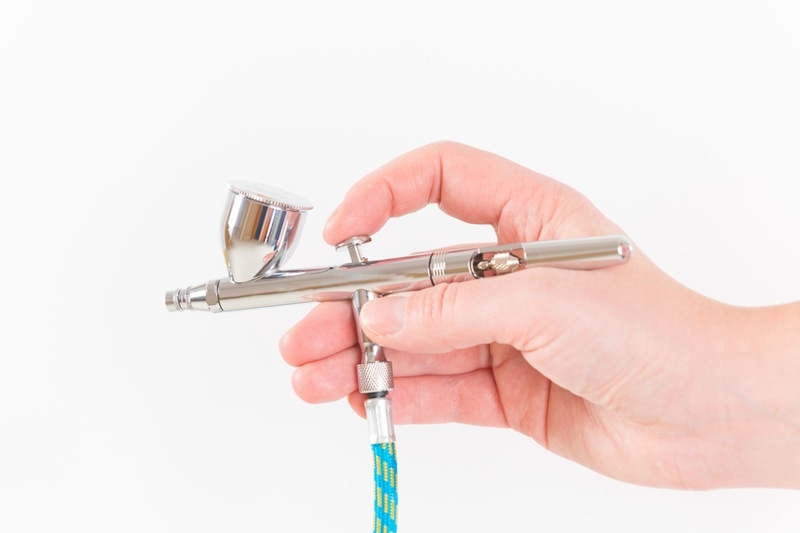
When it comes to airbrushing, people often spend a lot of time researching compressors, paint, and trigger configurations, but oddly, one of the most vital parts to the entire airbrush setup is also one of the smallest. The airbrush needle is one unsung hero that works subtly to determine paint flow, line smoothness, and the control you really have when you are working.
If your spray pattern is suddenly splotchy and the lines are uneven, it is not always you. The needle is most likely the cause of the problem.
This is why experienced airbrush artists keep a close eye on high-quality professional airbrush needles, especially when they are engaged in fine line airbrushing, detailed spray painting, or custom paint detailing projects.
We will take a closer look at why airbrush needles are so important, the needle size comparison for your spray, and how a well-set-up precision nozzle setup can improve your airbrush spraying entirely.
At first glance, the needle seems incredibly simple compared to the other parts of the airbrush. In the interior of the airbrush body, you'll see a thin piece of metal, which is your needle, and it is directly related to how your paint is sprayed. The trigger on the airbrush actually pulls the needle back from the nozzle, allowing the paint to be pulled through. When the trigger is held down, the needle pulls back, creating a space for the paint to flow. The smoother the needle is, the cleaner and more consistent the spray is.
Professional airbrush needles have much tighter manufacturing tolerances and smoother finishes than lower-quality versions. In addition to making the airbrush much smoother to use, this leads to fewer:
This becomes especially important when you are detail-spraying or when your mistakes become readily visible.
According to custom paint equipment reports from 2025, precision upgrades remain among the top choices for many airbrush and scale model painters.
One of the biggest mistakes people new to airbrushing make is believing that all airbrush needles are equal.
A needle size comparison is quite simple: the diameter of the airbrush needle is, and it will dramatically change the effect on your spray. If your needle is smaller, your paint output will be finer; larger paint output and wider coverage will only happen when you use a bigger needle.
To give you an idea:
Artists who engage in fine-line airbrushing usually go for a smaller needle, as it allows the artwork to have much finer details and gives much finer control over the spray pattern. Automotive painters and artists who are painting large coverage areas may choose larger setups for smoother coverage. This causes frustrating problems, such as poor spray line definition, uneven paint flow, and clogging, if you don't have the proper setup. This is why an experienced airbrush artist usually owns many different needle sizes to have for various jobs.
There are many things that even high-quality airbrushes may falter on, but even a tiny bend in the tip of your airbrush needle, though barely visible to the eye, can dramatically alter airflow. It is incredibly common to blame air pressure or the type of paint you are using when, quite simply, it is your needle that has gone bad. The signs that your needle is failing you are typically the following:
Most artists accidentally damage their needles either during cleaning or when they rush through the reassembly process. This is why it's smart to regularly inspect your airbrush needles and use strong lighting to look for any small flaws.
A nozzle is a tiny component that works closely in sync with your airbrush needle to produce the fine spray of paint. If your needle is fine and works perfectly, it is still important to use a fine nozzle so it will work properly if you aren't taking care of it, and to use a good nozzle to avoid problems like the spray pattern going out of control.
Nozzle instability causes:
Many experienced artists know that it is best practice to clean needles and nozzles together so they work well together. This makes for smoother trigger response and more consistent spray patterns.
The simple truth is, as you progress as an airbrush artist, you may find that you need much more precision and control than what your factory needle and nozzle can give you. Higher-quality, professional airbrush needles are more durable; they are more consistent and much smoother when the trigger is moved, which ultimately gives you finer control.
When you are doing custom paint detailing, model airbrushing, or detailed portraits, minute inconsistencies make a huge difference. Many artists find it much more time-consuming to clean up mistakes when they have made them during a delicate spray painting project.
The difference between a messy airbrush spray pattern and a smooth, consistent, fine-detail line rests on a number of variables. Compressors and paint types are huge, but as you can see from what we’ve learned today, the importance of the airbrush needle cannot be overemphasized for details in custom paint detailing, scale model airbrushing, or even the simple airbrush artwork we all want to achieve.
So, whether you need ultra-fine detail, smoother coverage, or simply more consistent paint flow, remember to look at the details and take care of the things you use to spray with!
A well-cared-for, professional airbrush needle can last a long time, depending on use and maintenance; even a professional needle will begin to falter and need to be replaced, probably around once every couple of years if used daily or less often if only used when required.
Ultra-fine airbrush needles are indeed a little difficult for beginners, simply because the paint is much more likely to clog and stick due to their fineness. For a beginner, it's best to use a standard-size needle. However, ultra-fine airbrushes are a great addition for expert artists.
Polishing the needle will provide much smoother airflow within the airbrush itself. This will increase paint flow and make it easier for you to push the trigger down and have smooth control of the needle's movements. Be very gentle, however, as even a slight mishandling could completely destroy the tip of the needle.
This content was created by AI