

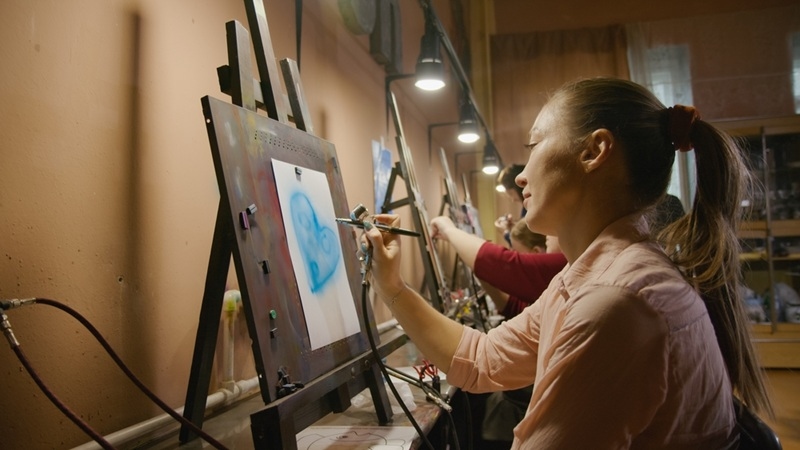
Artists use advanced airbrushing techniques to control the movement and airflow. This helps them to create smooth and realistic artworks. You can use these techniques to build layers and add details to your work.
In this blog, you will find out why advanced airbrushing techniques matter and the top airbrush shading techniques.
Must Read: Mastering Airbrush Masking Techniques And Depth In Art Work
Advanced airbrushing techniques allow artists to create depth that looks natural instead of flat. It gives control over how paint sits on the surface, which makes shadows softer and highlights more balanced.
Without proper technique, the artwork may look uneven or rough. These methods help reduce that problem. They also make it easier to fix small mistakes without damaging the entire work. Artists notice that their work looks cleaner and more consistent over time.
This style continues to attract attention because it feels close to real life. It is not just about detail, but about how everything blends together naturally.
Hyper-realistic airbrush art creates visuals that closely match real objects and faces. The smooth layers and soft transitions help remove artificial edges, which makes the final result feel more lifelike and believable.
One clear reason for its popularity is the clean surface it produces. There are no visible strokes or rough textures, which gives the artwork a polished and finished look that stands out immediately.
This style works well for portraits, objects, and even abstract visuals. Artists can apply the same approach across different themes, which makes it a preferred choice in many creative areas.
Shading builds structure in artwork. It gives shape to objects and helps define light and shadow. These airbrush shading techniques are often used to improve depth and balance.
This technique emphasizes the smooth transition between light and dark. The artist develops the shade gradually. This prevents harsh edges and allows for a smooth flow.
The shading in this technique follows the direction of the light. This technique helps in showing the direction from which the light is falling. This technique also adds realism to the artwork.
Layers are added to the artwork instead of applying strong shadows in this technique. You can use this technique to have proper control. It also helps in adjusting the intensity without disturbing the overall balance.
In this technique, the distance between the tool and the artwork is controlled. This technique allows for a sharper look when the tool is closer to the artwork. This technique also allows for a softer look when there is a distance between the tool and the artwork.
In this technique, edges are made sharper in some parts and softer in others. This technique helps in guiding the viewer’s eye. This technique also adds structure to the artwork without making it harsh.
Blending helps connect different colors and tones smoothly. It removes visible transitions and makes the artwork look natural. These airbrush blending methods are simple but very effective.
Colors are added in thin layers, one over another. This builds a smooth transition and prevents sudden changes. It also gives more time to adjust the look if needed.
The artist moves the tool in a steady motion across the surface. This helps spread the paint evenly and reduces patchy areas that can ruin the finish.
Blending while the paint is still slightly wet allows colors to merge easily. This creates a soft transition and avoids hard lines between shades.
A circular motion helps distribute paint evenly. It reduces streaks and helps in achieving a balanced tone across larger areas.
Light passes are used instead of heavy applications. This keeps the surface smooth and avoids overloading the paint, which can lead to uneven texture.
You can check the list below to learn how to master airbrush fine detail techniques:
Using low paint flow also helps in maintaining precision. This is because it prevents the spreading of the paint.
Having a steady hand is very important when working on details. This is because any small shake in the hand may interfere with the end result.
Working closer to the surface helps in maintaining precision when creating fine lines. This is because it helps in creating clean details without the spread of the paint.
One should not rush while creating details. This is to ensure that the end result is clean and neat.
The trigger determines how much paint is released. This helps in creating fine lines and shapes.
The following list will help you to understand the 5 practical professional airbrush tips:
A clean surface will also help the paint settle well. Dust or an irregular surface will always have an impact on the final look.
Testing will help check if everything is working well. This will also help avoid mistakes with the final work.
Using light layers will help have better control, thus avoiding overpainting. This will also help with the creation of smooth blending.
Advanced techniques in airbrushing are also available to help in achieving a better level of control, details, and quality in the artwork. The emphasis on the basic techniques and practice ensures that realistic artwork is created without complicating the process. The techniques become easier to use over time.
Advanced techniques of airbrushing emphasize control, layering, and detail. They assist in the development of smoother transitions, more distinct details, and realistic depth. The basic techniques of airbrushing may not provide such control; hence, the final work may appear less refined in comparison to the advanced techniques.
The hyper-realistic airbrush art is popular because it closely resembles the visuals in real life. The smooth finish on the artwork makes it stand out. Humans tend to be fascinated by artwork that is close to reality. This type of art gives the audience that feeling.
Improvement can be achieved with practice and an understanding of the direction of light. An artist can begin with simple forms and focus on smooth transitions to develop skills. They can master working with layers and shade without creating harsh or uneven areas.
This content was created by AI